-
Email
-
WhatsApp
-
Address
Zhengzhou,Henan,China
Zhengzhou,Henan,China
2021-5-21 Aluminium Alloy Data Sheet 5251 Revised October 2013 Page 1 of 3 atlassteels.au Alloy 5251 is a non-heat-treatable 2% magnesium, 0.3% manganese alloy commonly available in flat rolled coil, sheet and plate from a few producing mills. Like all the 5000-series high magnesium alloys 5251 has a fairly high strength and is hardenable to a ...
Aluminium must be very dry clean to avoid contamination porosity of the weld. Filler metals 1100, 4043 or 4047 are used. 4043 is the most crack tolerant. Shielding gas must be dry free of hydrogen. Heat Treatment Aluminium 5251 is annealed at 345°C, time at temperature and cooling rate are unimportant. Stress relief is rarely required ...
预计阅读时间:4 分钟5052 h32 aluminum sheet - - Mingtai AL. Mar 03, 2021 5052 h32 aluminum sheet is 5052 aluminum that is H32 quenched. In order to achieve this tempering, the metal is strain-hardened and then stabilized so that its strength reaches about a quarter of the strength of annealing (O) and full hard (H38). 5052 h32 aluminum alloy is a high-strength, non-heat-treatable metal
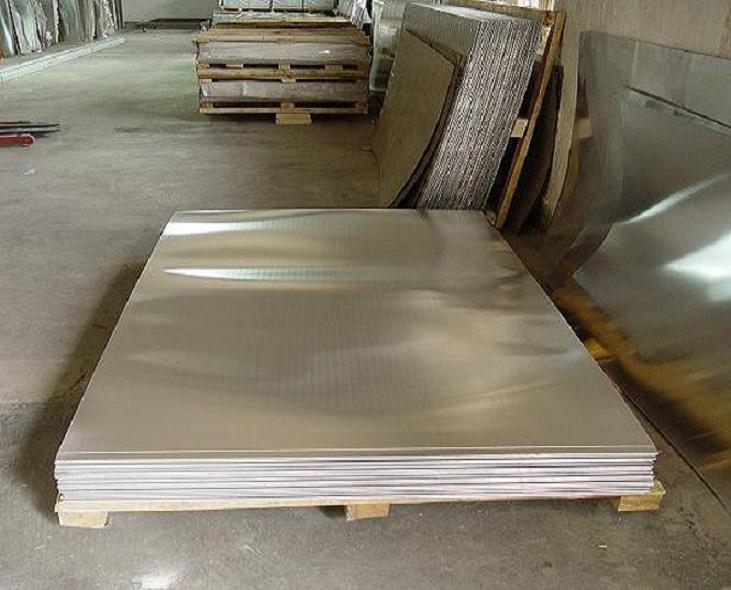
5251 - H22 Sheet and Plate. Aluminium alloy 5251 is a medium strength alloy possessing good ductility and therefore good formability. Alloy 5251 is known for work hardening rapidly and is readily weldable. It also possesses high corrosion resistance particularly in marine environments. Mechanical Properties shown are for H22 condition ...
Aluminium Alloy - Commercial Alloy - 5251 - H24 Sheet . 5251 - H24 Sheet and Plate. Aluminium alloy 5251 is a medium strength alloy possessing good ductility and therefore good formability. Alloy 5251 is known for work hardening rapidly and is readily weldable. It also possesses high corrosion resistance particularly in marine environments.
11. Annealed (O temper) material shall, apon heat treatment or heat treatment and aging, be capable of developing the mechanical properties applicable to T42 or T62 temper material respectively. 12. Material heat treated (T42) or heat treated and
Aluminium alloys (or aluminum alloys; see spelling differences) are alloys in which aluminium (Al) is the predominant metal. The typical alloying elements are copper, magnesium, manganese, silicon, tin and zinc.There are two principal classifications, namely casting alloys and wrought alloys, both of which are further subdivided into the categories heat-treatable and non-heat
2021-10-20 Aluminium Plates. Champak Industries is one of prominent supplier of Aluminum Plates and sheets in Mumbai –India. We large stock of 1050A ALUMINIUM PLATE, 1350 ALUMINIUM PLATE, 2024 ALUMINIUM PLATE, 2124 ALUMINIUM PLATE, 2219 ALUMINIUM PLATE, 3003 ALUMINIUM PLATE, 5052 ALUMINIUM PLATE, 5083 ALUMINIUM PLATE,
11. Annealed (O temper) material shall, apon heat treatment or heat treatment and aging, be capable of developing the mechanical properties applicable to T42 or T62 temper material respectively. 12. Material heat treated (T42) or heat treated and
Aluminium alloys (or aluminum alloys; see spelling differences) are alloys in which aluminium (Al) is the predominant metal. The typical alloying elements are copper, magnesium, manganese, silicon, tin and zinc.There are two principal classifications, namely casting alloys and wrought alloys, both of which are further subdivided into the categories heat-treatable and non-heat
[PDF]2016-4-4 6xxx Al-Mg-Si Heat treat 150–380 22–55 7xxx Al-Zn-Mg Heat treat 380–520 55–75 7xxx Al-Zn-Mg-Cu Heat treat 520–620 75–90 8xxx Al-Li-Cu-Mg Heat treat 280–560 40–80 Table 3 Strength ranges of various cast aluminum alloys Tensile strength range Alloy system (AA designation) MPa ksi Heat treatable sand cast alloys (various tempers)
[PDF]The heat-resistant casting alloys are those composi-tions that contain at least 12% chromium which are capable of performing satisfactorily when used at tem-peratures above 1200 ºF. As a group, heat-resistant compositions are higher in alloy content than the corrosion-resistant types. The heat-resistant alloys are
2018-10-24 Designed for general sheet metal work 5251 (NS4) is an alloyed non-heat treatable aluminium sheet product which is ideal for applications where a greater degree of formability is required combined with higher mechanical property characteristics. TECHNICAL DESCRIPTION The alloy is internationally recognised as EN AW 5251 H22 and is AlMg2 ...
Aluminium must be very dry clean to avoid contamination porosity of the weld. Filler metals 1100, 4043 or 4047 are used. 4043 is the most crack tolerant. Shielding gas must be dry free of hydrogen. Heat Treatment Aluminium 5251 is annealed at 345°C, time at temperature and cooling rate are unimportant. Stress relief is rarely required ...
5251 Aluminum Sheet - Buy 5251 aluminum plate, 5251 . 5251 Aluminum Sheet, find complete details about 5251 Aluminum Sheet, 5251 aluminum plate, 5251 aluminum coil, aluminum sheet - YONGHONG NEW MATERIAL LTD. 5251 Aluminum Sheet. Aluminium alloy 5251 is a medium strength alloy possessing good ductility and therefore good formability. Aluminum ...
aluminum alloy 5251 corrosion resistance . If you have any questions or good suggestions on our products and site, or if you want to know more information about our products, please write them and send to us, we will contact you within one business day.
11. Annealed (O temper) material shall, apon heat treatment or heat treatment and aging, be capable of developing the mechanical properties applicable to T42 or T62 temper material respectively. 12. Material heat treated (T42) or heat treated and
Aluminium alloys (or aluminum alloys; see spelling differences) are alloys in which aluminium (Al) is the predominant metal. The typical alloying elements are copper, magnesium, manganese, silicon, tin and zinc.There are two principal classifications, namely casting alloys and wrought alloys, both of which are further subdivided into the categories heat-treatable and non-heat
2015-2-18 Heat Treating Overview Heat treating, as the name implies, is a series of treatments in which heat is used to alter the properties of a metal or alloy. Because time at temperature is also important, heat treatment can be further defined as a series of time-temperature treat-ments. Heat treatments are used for a variety of purposes, the
To resist sulfidation, it is important to try and keep the nickel content of the alloy to a minimum. As a maximum, Rolled Alloys would suggest keeping the nickel content of the alloy at 20% or lower. 310 stainless with 20% nickel has shown good resistance to sulfidation attack as it forms a very tightly adhering oxide scale due to the 25% ...