-
Email
-
WhatsApp
-
Address
Zhengzhou,Henan,China
Zhengzhou,Henan,China
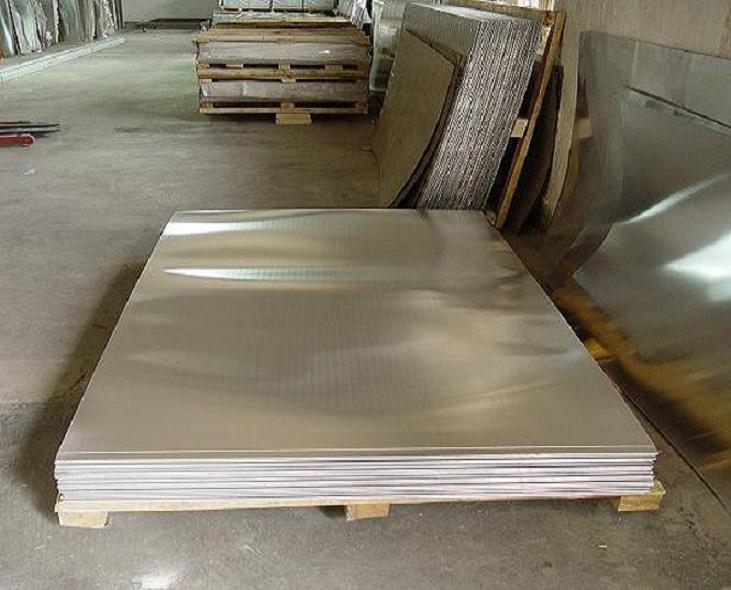
Aluminum 5083 is a non-heat treatable alloy known for its resistance to extreme environments, including seawater corrosion and industrial chemicals. While featuring limited machinability due to its exceptional strength, AL 5083 is the material of choice for marine and aquatic applications and is typically used in shipbuilding.
2020-7-7 Aluminum 5083 is a non-heat treatable alloy known for its resistance to extreme environments, including seawater corrosion and industrial chemicals. While featuring limited machinability due to its exceptional strength, Al-5083 is the material of choice for marine and aquatic applications and is typically used in shipbuilding.
Also known as armor plate, these 5083 aluminum sheets are hardened to an H131 temper for increased strength and impact resistance over standard 5083 sheets. They meet MIL-DTL-46027 and are the grade of aluminum used for personnel carriers in military operations. 5083 is highly corrosion resistant and is especially suited for use around salt water.
Aluminum 5083 is a non-heat treatable alloy known for its resistance to extreme environments, including seawater corrosion and industrial chemicals. While featuring limited machinability due to its exceptional strength, AL 5083 is the material of choice for marine and aquatic applications, and is typically used in shipbuilding.
5083 Aluminum Plate Alloy 5083 aluminum plates have higher strength than 5052 plate and has exceptional thermal conductivity. In the tempered condition, it retains good formability due to excellent ductility. It is highly suitable for welding and can be hardened by cold work.
2021-12-24 aluminum alloys 5083 and 5383. Int J Nav Arch Ocean. 2009;1:39–49. [19] Birol Y, Kasman S. Effect of welding parameters on References microstructure and mechanical properties of friction [1] Mishra RS, Ma ZY. Friction stir welding and
5083 vs 5086 is the main alloy of aluminum plates for ships. In shipbuilding, 5083 and 5086 aluminum plates are often used to process multiple parts such as the hull, console, and deck. These two alloys are more commonly used, and the alloy state is rich, and there are many types of specifications.
预计阅读时间:3 分钟 [PDF]2021-9-8 Aluminium 5083 is known for exceptional performance in extreme environments. 5083 is highly resistant to attack by both seawater and industrial chemical environments. Alloy 5083 also retains exceptional strength after welding. It has the highest strength of the non-heat treatable alloys but is
Aluminum 5083 is a non-heat treatable alloy known for its resistance to extreme environments, including seawater corrosion and industrial chemicals. While featuring limited machinability due to its exceptional strength, AL 5083 is the material of choice for marine and aquatic applications, and is typically used in shipbuilding. Other uses for this alloy include transportation applications
Alloy AA 5083. Aluminium AA 5083 is known for its exceptional performance in extreme environments. Highly resistant to both seawater and industrial chemical environments, Alloy AA 5083 also retains exceptional strength after welding. Out of the non-heat-treatable grades, 5083 is one of the higher strength alloys.
2021-12-24 aluminum alloys 5083 and 5383. Int J Nav Arch Ocean. 2009;1:39–49. [19] Birol Y, Kasman S. Effect of welding parameters on References microstructure and mechanical properties of friction [1] Mishra RS, Ma ZY. Friction stir welding and
Gas metal arc welding of aluminum 5083 alloys was performed using three new welding wires with different magnesium and manganese contents and compared with commercial aluminum 5183 alloy filler wire. To investigate the effect of magnesium and manganese contents on the mechanical properties of welds, mechanical properties were evaluated through tensile
Aluminum alloy 5083 is one of the materials that meet the criteria because this type of aluminum has a low density, good corrosion resistance, good formability, and is the strongest non-heat-treatable alloy used in annealed conditions [ 1]. In the manufacture of specific marine ship-building components, a casting process is required.
2021-5-21 Aluminium Alloy Data Sheet 5083 Revised October 2013 Page 1 of 3 atlassteels.au Alloy 5083 is a non-heat-treatable 4½% magnesium, 0.15% chromium, 0.7% manganese alloy commonly available in flat rolled plate from a range of producing mills. Like all the 5000-series high magnesium alloys 5083 achieves a high strength by cold working,
5083 Aluminum Plate. Alloy 5083 aluminum plates have higher strength than 5052 plate and has exceptional thermal conductivity. In the tempered condition, it retains good formability due to excellent ductility. It is highly suitable for welding and can be hardened by cold work.
2020-5-30 5083 aluminum is a 5000-series aluminum alloy: the main alloying addition is magnesium, and it is formulated for primary forming into wrought products. 5083 is the Aluminum Association (AA) designation for this material. In European standards, it will be given as EN AW-5083. N8 is the British Standard (BS) designation. A95083 is the UNS number.
Aluminum alloy 5083 is one of the materials that meet the criteria because this type of aluminum has a low density, good corrosion resistance, good formability, and is the strongest non-heat-treatable alloy used in annealed conditions [ 1]. In the manufacture of specific marine ship-building components, a casting process is required.
[PDF]2021-12-14 Commercial 5083 EN 5083 Aluminium 5083 is known for exceptional performance in extreme environments. 5083 is highly resistant to attack by both seawater and industrial chemical environments. Alloy 5083 also retains exceptional strength after welding. It has the highest strength of the non-heat treatable alloys but is not recommended for use in
2021-12-24 aluminum alloys 5083 and 5383. Int J Nav Arch Ocean. 2009;1:39–49. [19] Birol Y, Kasman S. Effect of welding parameters on References microstructure and mechanical properties of friction [1] Mishra RS, Ma ZY. Friction stir welding and
2021-3-8 As a material with good corrosion resistance, 5083 aluminum alloy has a great application prospect in marine environment. In this work, the corrosion characteristics of 5083 aluminum alloy in seawater containing phosphate were investigated with Potentiodynamic Polarization, Electrochemical Impedance Spectroscopy (EIS), Scanning Electron Microscope