-
Email
-
WhatsApp
-
Address
Zhengzhou,Henan,China
Zhengzhou,Henan,China
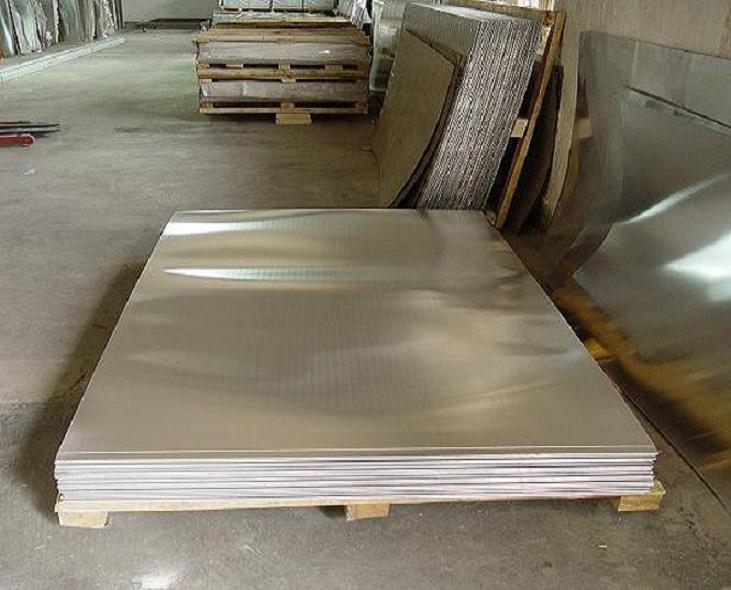
May 30, 2020 7005 (AlZn4.5Mg1.5Mn, A97005) Aluminum 7005 aluminum is a 7000-series aluminum alloy: the main alloying addition is zinc and it is formulated for primary forming into wrought products. 7005 is the Aluminum Association (AA) designation for this material. In European standards, it will be given as EN AW-7005. A97005 is the UNS number.
预计阅读时间:2 分钟May 30, 2020 7005-O aluminum is 7005 aluminum in the annealed condition. It has the lowest strength and highest ductility compared to the other variants of 7005 aluminum. The graph bars on the material properties cards below compare 7005-O aluminum to: 7000-series alloys (top), all aluminum alloys (middle), and the entire database (bottom).
预计阅读时间:50 秒They are sensitive to high temperatures ranging between 200 and 250°C (392 and 482°F), and tend to lose some of their strength. However, the strength of Aluminium / Aluminum alloys can be enhanced at subzero temperatures, thus making them good low-temperature alloys. Aluminium / Aluminum 7005 alloy is a wrought alloy type.
预计阅读时间:50 秒AA 7000 Series (Aluminum-Zinc Wrought Alloy) Wrought alloys with zinc (Zn) as the second largest component after aluminum (Al). Magnesium (Mg) is a common third-place component. 7003 (AlZn6Mg0.8Zr, A97003) Aluminum 7005 (AlZn4.5Mg1.5Mn, A97005) Aluminum.
Tensile Modulus - or Young's Modulus alt. Modulus of Elasticity - is a measure of stiffness of an elastic material. It is used to describe the elastic properties of objects like wires, rods or columns when they are stretched or compressed. Tensile Modulus is defined as the. "ratio of stress (force per unit area) along an axis to strain (ratio ...
7075 aluminum alloy is a high-strength, heat-treatable wrought alloy developed by Alcoa in 1943. The alloy contains zinc, magnesium, chromium and copper as hardeners, as well as small amounts of iron, silicon, manganese and titanium. The tempered design include aluminum 7075-T6, T651, T7351, T73, T76, T7651, O, W, W51, etc.
Tensile Modulus - or Young's Modulus alt. Modulus of Elasticity - is a measure of stiffness of an elastic material. It is used to describe the elastic properties of objects like wires, rods or columns when they are stretched or compressed. Tensile Modulus is defined as the. "ratio of stress (force per unit area) along an axis to strain (ratio ...
7075-T6 Aluminium Mechanical Properties. Brinell Hardness = 150. Elastic (Young's, Tensile) Modulus = 70 GPa. Tensile Strength: Ultimate (UTS) = 560 MPa. Tensile Strength: Yield (Proof) = 480 MPa. Elongation at break = 7.9%. Fatigue Strength = 160 MPa. Poisson's Ratio = 0.32. Shear Modulus = 26 GPa.
Apr 19, 2021 Aluminum has a Young's modulus of 10000 ksi. Compare this to copper at 17550 ksi or wood at 1595 ksi. Tensile strength ultimate: 13,000 Psi: Yield strength: 5,000 Psi: Bearing yield strength: 23100 Psi: Elongation at break: 15-28%: Shear Strength: 9000 Psi: Fatigue strength: 5000 Psi
Apr 28, 2015 The residual Young's modulus was calculated from the stress-strain relations measured using strain gages. 6061 Young's modulus is nearly constant for all temperatures with an as-received value of 69.5 ± 0.2 GPa and an average for all tested temperatures is 69.4 GPa ± 0.5 GPa. 5083 exhibited a 2% increase in modulus from as-received to 300 ...
Yield strengths vary from 35 MPa for a low-strength aluminum to greater than 1400 MPa for very high-strength steels. Young's Modulus of Elasticity. Young's modulus of elasticity of 2024 aluminium alloy is about 76 GPa. Young's modulus of elasticity of
6082 - T6~T651 Plate. Aluminium alloy 6082 is a medium strength alloy with excellent corrosion resistance. It has the highest strength of the 6000 series alloys. Alloy 6082 is known as a structural alloy. In plate form, 6082 is the alloy most commonly used for machining. As a relatively new alloy, the higher strength of 6082 has seen it replace ...
The mass density of aluminum is 2.7 g/cm3 (0.0975 lb/in3), which is about 1/3 of that of steel (7.83 g/cm3), copper (8.93 g/cm3) or brass (8.53 g/cm3). The weight of aluminum per cubic inch is 0.0975 pound, 2.7 grams per cubic centimeter. If calculating the aluminum weight per square foot, must first measure the thickness of the aluminum sheet ...
May 30, 2020 7021 (7021-T6, AlZn5.5Mg1.5) Aluminum. 7021 aluminum is a 7000-series aluminum alloy: the main alloying addition is zinc and it is formulated for primary forming into wrought products. Cited properties are appropriate for the T6 temper. To achieve this temper, the metal is solution heat-treated and artificially aged until it meets standard ...
Aluminum 7075-T6; 7075-T651. Subcategory: 7000 Series Aluminum Alloy; Aluminum Alloy; Metal; Nonferrous Metal Close Analogs: Composition Notes: A Zr + Ti limit of 0.25 percent maximum may be used with this alloy designation for extruded and forged products only, but only when the supplier or producer and the purchaser have mutually so agreed.
Aluminium–lithium alloy. Aluminium–lithium alloys (Al–Li alloys) are a set of alloys of aluminium and lithium, often also including copper and zirconium. Since lithium is the least dense elemental metal, these alloys are significantly less dense than aluminium. Commercial Al–Li alloys contain up to 2.45% lithium by mass.
Nov 13, 2020 Aluminium alloy 6061 is a medium to high strength heat-treatable alloy with a strength higher than 6005A. It has very good corrosion resistance and very good weldability although reduced strength in the weld zone. It has medium fatigue strength. It has good cold formability in the temper T4, but limited formability in T6 temper.
80/20 Inc. provides a T-slot framing system and resources in your hands to turn dreams into reality. It's easy to assemble and can be configured into endless custom solutions, from DIY project to industrial applications. 80/20 is versatile - from machine guards to robotic arms, racing simulators, and workstations, it is a product for individuals, industries, and businesses.
Jan 02, 2022 The yield strength is the measure of the maximum amount of stress that will not permanently (or just “elastically”) deform a specimen of alloy (to learn more on this topic, feel free to read about it in our article all about 7075 aluminum alloy).When comparing 6061 and 7075 aluminum's yield strengths, it is evident that 7075 aluminum is far superior by a factor of
Thermal Properties of 7075 Aluminum. Here we can see some thermal properties of the alloy including the coefficient of thermal expansion and thermal conductivity. The Annealed, T6, and T73 conditions are included. Property. 7075-O. 7075-T6, -T651. 7075-T73, -T7351. Coefficient of Thermal Expansion @ 20.0 - 100 °C Temp.
Aluminium 6061-T6 is a sub-category of the 6061 alloy, one of the most widely used aluminium alloys. The 6061-T6 alloy is used in applications where high strength to low weight ratios are critical such as the aircraft and aerospace industries. It is the way the base Aluminium 6061 is treated that give Aluminium 6061-T6 it particular ...
Aluminium alloys (or aluminum alloys; see spelling differences) are alloys in which aluminium (Al) is the predominant metal. The typical alloying elements are copper, magnesium, manganese, silicon, tin and zinc.There are two principal classifications, namely casting alloys and wrought alloys, both of which are further subdivided into the categories heat-treatable and non-heat
Yield strengths vary from 35 MPa for a low-strength aluminum to greater than 1400 MPa for very high-strength steels. Young's Modulus of Elasticity. Young's modulus of elasticity of 6061 aluminium alloy is about 69 GPa. Young's modulus of elasticity of
May 30, 2020 7021 (7021-T6, AlZn5.5Mg1.5) Aluminum. 7021 aluminum is a 7000-series aluminum alloy: the main alloying addition is zinc and it is formulated for primary forming into wrought products. Cited properties are appropriate for the T6 temper. To achieve this temper, the metal is solution heat-treated and artificially aged until it meets standard ...
Answer: In electrolysis, you pass electricity, via two metal connections, into a chemical compound, which then gradually splits apart into its atoms.) Once separated out, the pure aluminum is cast into blocks known as ingots, which can be worked or
2219 aluminium alloy is an alloy in the wrought aluminium-copper family (2000 or 2xxx series). It can be heat-treated to produce tempers with higher strength but lower ductility. The aluminium-copper alloys have high strength, but are generally less corrosion resistant and harder to weld than other types of aluminium alloys.
Lithium tetrahydridoaluminate(1-) (Lithium aluminum hydride) (CAS No. 16853-85-3) (provided for in subheading 2850.00.50) Free: No change: No change: 9902.01.80: Cyanamide (CAS No. 420-04-2) (provided for in subheading 2853.90.90) Free: No change: No change: 9902.01.81: n-Butyl chloride (1-Chlorobutane) (CAS No. 109-69-3) (provided for in ...
Aluminium–lithium alloy. Aluminium–lithium alloys (Al–Li alloys) are a set of alloys of aluminium and lithium, often also including copper and zirconium. Since lithium is the least dense elemental metal, these alloys are significantly less dense than aluminium. Commercial Al–Li alloys contain up to 2.45% lithium by mass.
Aluminum 7075-T6; 7075-T651. Subcategory: 7000 Series Aluminum Alloy; Aluminum Alloy; Metal; Nonferrous Metal Close Analogs: Composition Notes: A Zr + Ti limit of 0.25 percent maximum may be used with this alloy designation for extruded and forged products only, but only when the supplier or producer and the purchaser have mutually so agreed.
where is the change in length, the applied force, is a factor, called the elastic modulus or Young's modulus, that depends on the substance, is the cross-sectional area, and is the original length. Table 3 lists values of for several materials—those with a large are said to have a large tensile stiffness because they deform less for a given ...
E is Young's modulus that describes the material stiffness. G is the shear modulus and may be left blank if you would like it calculated automatically. The equation for “ G ” is: Note. If you enter a value for Shear Modulus that does not match the value calculated using the above equation you will be given a warning.
The estimated uncertainties are: flexural frequency in vacuum ±0.06 Hz, torsional frequency in vacuum ±0.18 Hz, Young's modulus ±0.016 × 10 11 N/m 2, shear modulus ±0.003 × 10 11 N/m 2, and Poisson's ratio ±0.005. The values of resonance frequency in air, obtainable as described above, are more accurate than the vacuum values because ...
Young's Modulus for steel is approximately 30 million pounds per square inch. The titanium alloy Ti3Al-2V is 15.5 million psi, and 6061 aluminum is approximately 10 million psi. Those ratios (three to two to one) are almost identical to the density ratios between these three materials.
The elasticity modulus is used to express how easily a material deforms. In Figure 1, it corresponds to the slope of the proportional limit on the stress-strain curve (the straight line up to point A). The following is a formula to find the tensile modulus of nylon 66 at equilibrium water absorption (2.5%). Stress corresponding to 0.5% ...
May 01, 2016 Gommers et al. showed large discrepancies between the experimentally obtained and predicted values of Young's modulus in a woven composite when using Voigt and Reuss methods . It is known that the Lamb wave modes supported by a test plate can have length-scales that are comparable to the RUC of a woven composite plate [15] .
May 08, 2013 It has excellent resistance to corrosion due to the thin layer of aluminium oxide that forms on the surface of aluminium when it is exposed to air. Aluminium / aluminum 7000 series consist of the alloying element - zinc in a larger quantity. Aluminium / aluminum 7029 alloy is a heat treatable wrought alloy. The following datasheet will provide ...
Aluminium alloys are alloys in which aluminium is the predominant metal. Typical alloying elements are copper, zinc, manganese, silicon, and magnesium. There are two principal classifications, namely casting alloys and wrought alloys, both of which are further subdivided into the categories heat-treatable and non-heat-treatable. About 85% of aluminium is used for
Elastic modulus. An elastic modulus (also known as modulus of elasticity) is a quantity that measures an object or substance's resistance to being deformed elastically (i.e., non-permanently) when a stress is applied to it. New!!: Aluminium alloy and Elastic modulus See more » Erbium. Erbium is a chemical element with symbol Er and atomic ...
Aluminium / Aluminum 6061 alloy is cold worked in the O temper condition. It can also be cold-formed in the T 4 and T 6 tempers. Annealing. Annealing of Aluminium / Aluminum 6061 alloy can be performed at 775°F for 2 to 3 h followed by controlled cooling at 10 to 260°C (50 to 500°F) per hour, and air cooling. Aging
Jul 20, 2012 SIFAT-SIFAT ALUMUNIUM Aluminium [Al] CAS-ID: 7429-90-5 An: 13 N: 14 Am: 26.981538 (2) g/mol Group No: 13 Group Name: Metals Block: p-block Period: 3 State: solid at 298 K Colour: silvery Classification: Metallic Boiling Point: 2792K (2519°C) Melting Point: 933.47K (660.32°C) Superconducting temperature: 1.175K (-271.975°C) Density: 2.70g/cm3 ...
6061-T6 Aluminum round tube has a tensile strength range of 20-42 KSI, and conforms to ASTM B221. 6061 round tube is used for structural, framing, marine and transportation applications as well as general machining parts. We also carry these products, similar to 6061-T6 Aluminum Round Tube.