-
Email
-
WhatsApp
-
Address
Zhengzhou,Henan,China
Zhengzhou,Henan,China
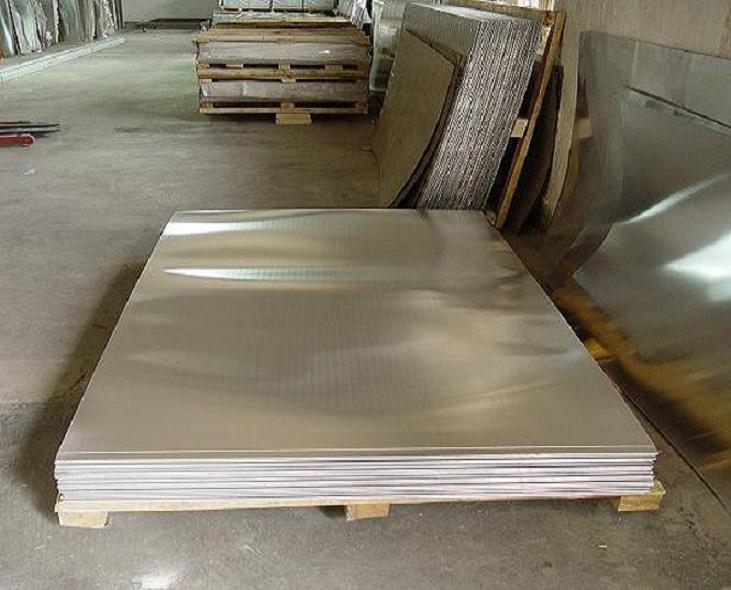
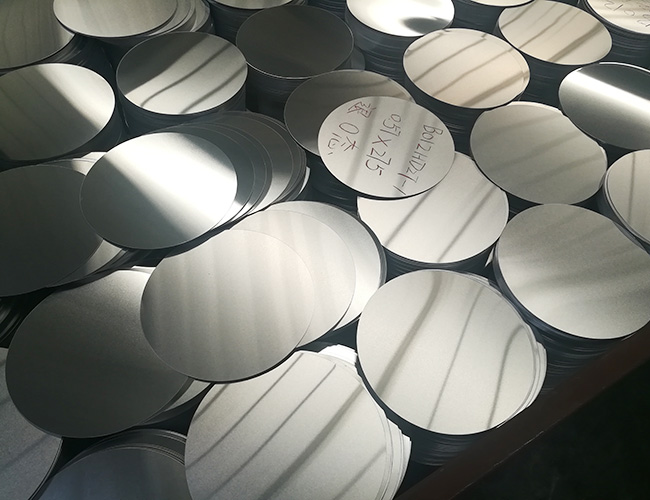
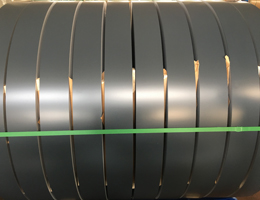
Aluminum engine block. Signialuminium specilizes in procesing Aluminum engine block, we have the slitter line, slab cutting line, shear line.. The equipments include sheet shear machine, plate sawing and cutting machine, tube and bar sawing machine and so on. We can slit, cut across, longitudinal cutting, sawing, shearing and coated with plastic.
Aluminum Metallurgy • Heat treatable aluminum alloys (2xxx, 6xxx, and 7xxx) gain strength through precipitation ... • Separate solution heat treatment is most common for extruded 2xxx and 7xxx aerospace alloys, not automotive alloys ... 6061 0.4 -0.80.7 max 0.15 0.40 0.25 max 1.2 110 240 18 0 260 14 10
An aluminum alloy is disclosed that is suitable for casting and machining cylinder blocks for engines, especially gasoline fuel engines for automotive vehicles. The casting has the strength and wear resistance to piston/seal scuffing for such engines. The alloy comprises, by weight, 9.5 to 12.5% silicon, 0.1 to 1.5% iron, 1.5 to 4.5% copper, 0.2 to 3% manganese, 0.1 to 0.6%
Cited by: 78Fabrication and Heat Treatment. Aluminum 3003 alloy can be formed using conventional hot working or cold working method. Hot worked at 260 to 510°C (500 to 950°F). Machinability: Machinability of the softer tempers O and H12 is poor, with the harder tempers such as H14 and above being somewhat easier to machine. Heat treatment:
The combination of magnesium and silicon in 6061 aluminum allows it to be heat treated to higher strength levels. It has good formability when in the fully soft, annealed condition and the strength can be significantly increased following a heat treatment. ... 0.15-0.40. 0.15. 0.8-1.2. 0.04-0.35. 0.25. 0.15. 0.05. 0.15. Remainder. Composition ...
Aluminum Metallurgy • Heat treatable aluminum alloys (2xxx, 6xxx, and 7xxx) gain strength through precipitation ... • Separate solution heat treatment is most common for extruded 2xxx and 7xxx aerospace alloys, not automotive alloys ... 6061 0.4 -0.80.7 max 0.15 0.40 0.25 max 1.2 110 240 18 0 260 14 10
6061 Aluminum. 6061 aluminum is the most commonly used grade of the heat treatable aluminum alloys. It has good formability, is weldable and corrosion resistant. Easy to work with and lightweight, 6061 is often used where lightweight and corrosion resistance is ideal. Easily cut, bent, drilled, formed, spun, tapped, drawn and stamped.
Aluminium alloys (or aluminum alloys; see spelling differences) are alloys in which aluminium (Al) is the predominant metal. The typical alloying elements are copper, magnesium, manganese, silicon, tin and zinc.There are two principal classifications, namely casting alloys and wrought alloys, both of which are further subdivided into the categories heat-treatable and non-heat
Standard Cut Tolerance: -0' to +1/8'We are a leading Manufacturer of aluminum blocks 6082 / 6061 / 2014 / 7075, aluminum sheet 6061 t6, aluminum plates, aluminum bar 6082/he30/64430, aluminum plate 5083 / 54300 and aluminum alloy 6061 - t6, t4, to, t651 plates from Mumbai, India. We having the facility of cutting we can provide you Aluminum ...
Typical mechanical properties of gas shielded arc welded butt joints in selected heat-treated heat treatable aluminum alloys. Base alloy and temper: Filler alloy: As-welded: Postweld solution heat treated and aged: Tensile strength: 0.2% Yield strength, in 50.8 mm (2 in.) Elongation: Tensile strength: 0.2% Yield strength, in 50.8 mm (2 in ...
Jan 26, 2021 Main Grades are: 5052, 5005, 5083, 5754, 5A05, 5A06, 5454. 5000 Series Aluminum alloy with Mg as the main alloying element. The content of magnesium is between 3-5%. Also can be called an aluminum-magnesium alloy. Not heat treated and strengthened.
With high accuracy and sophisticated technology, our products meet the most stringent and specific requirements set by our customers across different industries. We offer extrusion for aluminium alloy 1070, 6005, 6061, 6063, 6082, as well as special alloys, with extrusion profiles measuring up to 300mm in CCD (Circumscribing Circle Diameter) and extrusion length up to
Solution heat-treated and then artificially aged-mechanical property level higher than T6 achieved through special control of the process 6000 series alloys T6511 Solution heated-treaded, stress-relieved by stretching a controlled amount (permanent set 1% to 3% for extruded rod, bar, shapes and tube, 0.5% to 3% for drawn tube) and then ...
The object of the invention is a sheet clad on one or both sides, formed of a core sheet in an alloy having the composition (% by weight): Si: 0.7-1.3, Mg: 0.6-1.2, Cu: 0.5-1.1, Mn: 0.15-1.0, Zn<0.5, Fe<0.5, Zr<0.2, Cr<0.25, other elements <0.05 each and <0.15 total, the remainder aluminum, and of cladding in aluminum alloy on at least one surface of the sheet, having a thickness per
Jan 01, 2018 0.15: 0.40–0.60: 0.10–0.50: 1.0 (with 0.015Sr) (no soldering) ... This microstructure has been commercially obtained for linerless all-aluminium engine blocks in which the primary Si (standing proud of the substrate) provides a superior wear resistant bore for the piston ring to run against. ... Rapid heat treatment of aluminum high ...
Aluminium alloys are alloys in which aluminium is the predominant metal. Typical alloying elements are copper, zinc, manganese, silicon, and magnesium. There are two principal classifications, namely casting alloys and wrought alloys, both of which are further subdivided into the categories heat-treatable and non-heat-treatable. About 85% of aluminium is used for
Aluminium alloys (or aluminum alloys; see spelling differences) are alloys in which aluminium (Al) is the predominant metal. The typical alloying elements are copper, magnesium, manganese, silicon, tin and zinc.There are two principal classifications, namely casting alloys and wrought alloys, both of which are further subdivided into the categories heat-treatable and non-heat
Aluminum sheet plates are created by surpassing aluminum between rolls underneath pressure, it becomes thinner and longer in the moving direction. ... 0.15-0.40: 0.15: 0.8-1.2: 0.04 ... It is a heat treated alloy possessing higher strength and is used in many general engineering applications. This alloy is also not considered as true marine alloy.
resistance of pure aluminum with the addition of Mn. This can be applied to various usages such as ware, ... Heat-treated alloy that became stable temper regardless of additional processing hardening. Subordinate ... A6061 0.40-0.8 0.7 or less 0.15-0.40 0.15 or less0.8 -1.2 0.04-0.35 0.25 or less0.15 or less Remaining part-
Aluminum retains its toughness at very low temperatures, without becoming brittle like carbon steels. Aluminum is a good conductor of heat and electricity. When measured by equal cross-sectional area, electrical grade aluminum has conductivity which is approximately 62% of electrical grade annealed copper. However, when compared using equal ...
Jan 01, 2018 0.15: 0.40–0.60: 0.10–0.50: 1.0 (with 0.015Sr) (no soldering) ... This microstructure has been commercially obtained for linerless all-aluminium engine blocks in which the primary Si (standing proud of the substrate) provides a superior wear resistant bore for the piston ring to run against. ... Rapid heat treatment of aluminum high ...
6060 is supplied in a wide range of tempers: O - Soft. T4 - Solution heat treated and naturaly aged to a substantially stable condition. T5 - Cooled from an elevated temperature shaping process and artificially aged. T6 - Solution heat treated and artificially aged. T66 - Solution heat treated then artificially aged by the user.
A Steel, as defined by the American Iron and Steel Institute, shall be considered to be alloy when the maximum of the range given for the content of alloying elements exceeds one or more of the following limits: Manganese, 1.65 %; silicon, 0.60 %; copper, 0.60 % or in which a definite range or a definite minimum quantity of any of the following elements is specified or required within
Dec 01, 2006 Heat-treating is defined as the controlled heating and cooling of a metal in order to change its physical and mechanical properties without changing its shape. A material often hardens or changes characteristics as a result of some sort of process that has been performed, such as machining or welding and is therefore an unintended consequence []
of thixocast Al-Si alloy, as cast and heat treated as well. 2. MATERIAL AND HEAT TREATMENTS Material that has been investigated is hypoeutectic Al-Si alloy A356 (AlSi7Mg0,3) and two sets of specimens were used for testing. First was taken from original alloy billet (ref. as A356) and second from thixocast alloy (ref. as Thixo).
Consumable materials for welding processes such as filler alloy, electrode, and shielding gas have major implications in welding technology. Selecting the appropriate set of consumable materials for welding aluminum alloys from various available alternates gives rise to a significant decision making problem. This study proposes a strategic justification tool based on integrated
Aluminium alloys (or aluminum alloys; see spelling differences) are alloys in which aluminium (Al) is the predominant metal. The typical alloying elements are copper, magnesium, manganese, silicon, tin and zinc.There are two principal classifications, namely casting alloys and wrought alloys, both of which are further subdivided into the categories heat-treatable and non-heat
cal properties of the PM AlMg5Si2Mn alloy could be achieved after solution treatment at 570°C for 8 hours, water quenching, and artificial aging at 240°C for 8 hours. After heat treatment, the UTS of the alloy increased from 172 MPa in the as-cast condition to 226 MPa, and the YS – from 85 MPa to 173 MPa, respectively.
4.4 With reference to Table 4.2, determine the quantity of heat required to increase the temperature of an aluminum block that is 10 cm x 10 cm x 10 cm from room temperature (21C) to 300° °C. Solution. Heat = (0.21 cal/g-°C)(103 cm3)(2.70 g/cm3)(300°C - 21°C) = 158,193 cal. Conversion: 1.0 cal = 4.184J, so heat = 662,196 J. Chapter 5:
Aluminum sheet plates are created by surpassing aluminum between rolls underneath pressure, it becomes thinner and longer in the moving direction. ... 0.15-0.40: 0.15: 0.8-1.2: 0.04 ... It is a heat treated alloy possessing higher strength and is used in many general engineering applications. This alloy is also not considered as true marine alloy.
Engine Blocks. D onovan Engineering has been making aluminum racing engine blocks for over 40 years. For leading race engine builders who win by design, Donovan gives you the finest materials and latest engineering. Each Donovan block is cast from strontium-modified B356 alloy with special heat treat. Four- and five-axis machining centers ...
Jul 28, 2006 Aluminum alloys 6061, 2024, and 7075 were heat treated to various tempers and then subjected to a range of plastic strain (stretching) in order to determine their strain limits. ... amounts of strain on the tensile properties of three aluminum alloys in different tempers. The properties that are shown by the ... 6061 0.40-0.8 0.7 0.15-0.40 0.15 ...
Table 1 Chemical composition of alloys* Table 2 Heat treating of alloys Alloy Type Si Cu Mg Fe Mn Ti Sr B Alloy Solution Aging Temper A A356 7.4 0.001 0.41 0.15 0.06 0.18 140 20 B 356 7.3 0.19 0.40 0.38 0.25 0.18 140 20 A 5 h at 530uC 4.5 h at 160uC T6 C A356z 7.2 0.47 0.32 0.18 0.09 0.14 140 20 B 5 h at 510uC 4.5 h at 210uC T7 0.5Cu C 5 h at ...
May 01, 2019 Aluminum Metallurgy • Heat treatable aluminum alloys (2xxx, 6xxx, and 7xxx) gain strength through precipitation ... • Separate solution heat treatment is most common for extruded 2xxx and 7xxx aerospace alloys, not automotive alloys ... 6061 0.4 -0.80.7 max 0.15 0.40 0.25 max 1.2 110 240 180 260 14 10
cal properties of the PM AlMg5Si2Mn alloy could be achieved after solution treatment at 570°C for 8 hours, water quenching, and artificial aging at 240°C for 8 hours. After heat treatment, the UTS of the alloy increased from 172 MPa in the as-cast condition to 226 MPa, and the YS – from 85 MPa to 173 MPa, respectively.
Aluminium alloys (or aluminum alloys; see spelling differences) are alloys in which aluminium (Al) is the predominant metal. The typical alloying elements are copper, magnesium, manganese, silicon, tin and zinc.There are two principal classifications, namely casting alloys and wrought alloys, both of which are further subdivided into the categories heat-treatable and non-heat
May 08, 2013 Heat treatment of aluminium / aluminum 7079 includes solution treatment, aging treatment, and annealing treatment. Machinability of aluminium / aluminum 7079 is good for T6 temper and matches the qualities of aluminium / aluminum 7075-T6. Workability is similar to aluminium / aluminum 7075 alloy. Forming in as-quenched condition provides good ...
6061 aluminum sheet is a heat-treated and strengthenable aluminum alloy sheet with medium strength. It belongs to 6000 series (Al-Mg-Si) alloy aluminum sheet and has good weldability. At the same time, 6061 aluminum coil sheet has excellent aluminum-magnesium composition ratio and strong corrosion resistance.
T6 indicates a solution heat treatment followed by artificial aging. Aluminum and Its Alloys. Some common applications of aluminum alloys: aircraft structural parts, beverage cans, bus bodies, and automotive parts (engine blocks, pistons, and manifolds).
An aluminum-silicon lost foam casting alloy having reduced microporosity and a method for casting the same is herein disclosed. A preferred lost foam cast alloy consists essentially of 6 to 12% by weight silicon and preferably 9.0 to 9.5% by weight silicon, 0.035-0.30% strontium, 0.40% maximum iron, 0.45% maximum copper, 0.49% maximum manganese, 0.60% maximum